MDO Benchmark
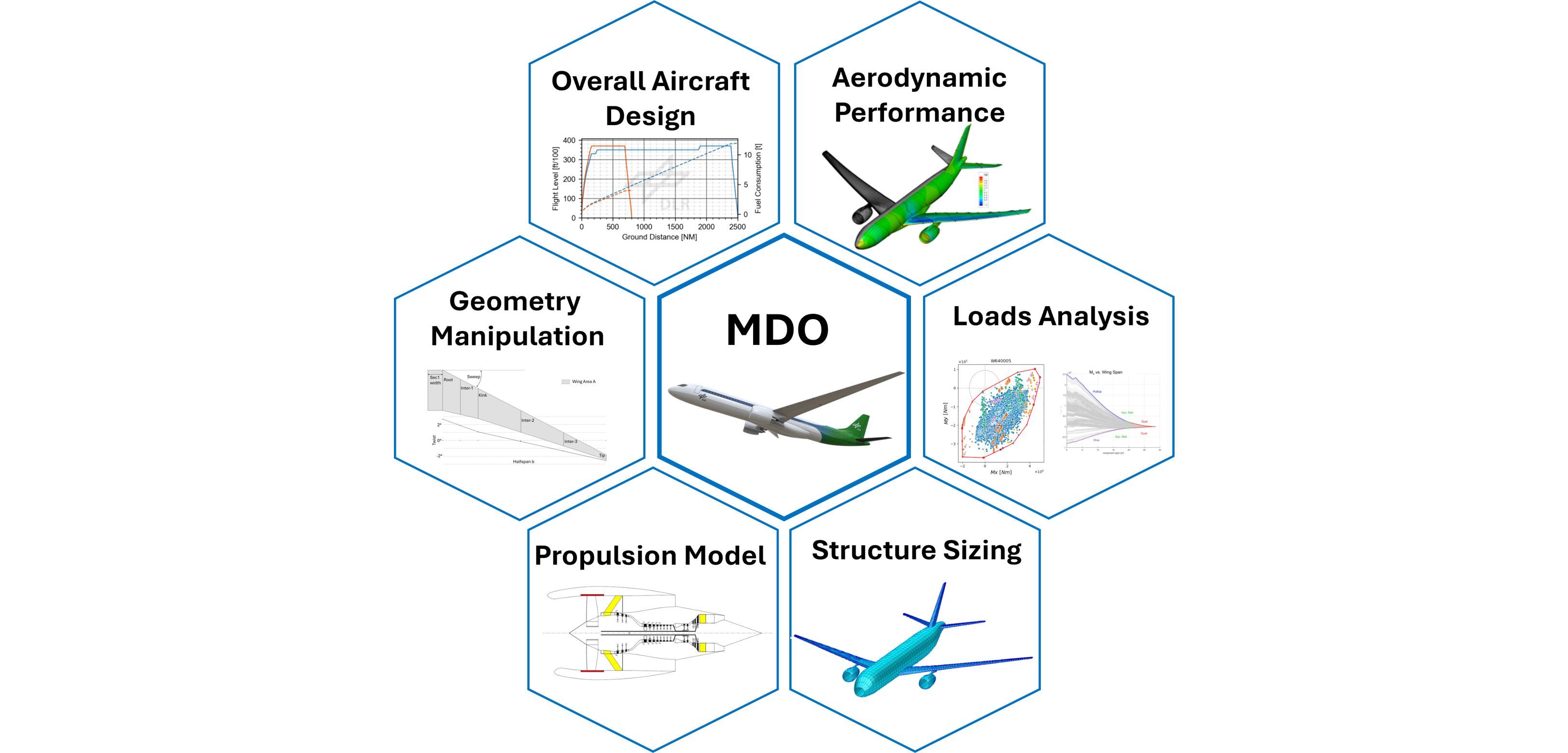

Multidisciplinary Design Optimisation (MDO) shapes an aircraft through all its design disciplines at once — aerodynamics, structures, propulsion and more — rather than one after the other. Each discipline pulls the design in a different direction: the aerodynamically ideal wing is rarely the lightest, and the lightest wing is rarely the most efficient in flight.
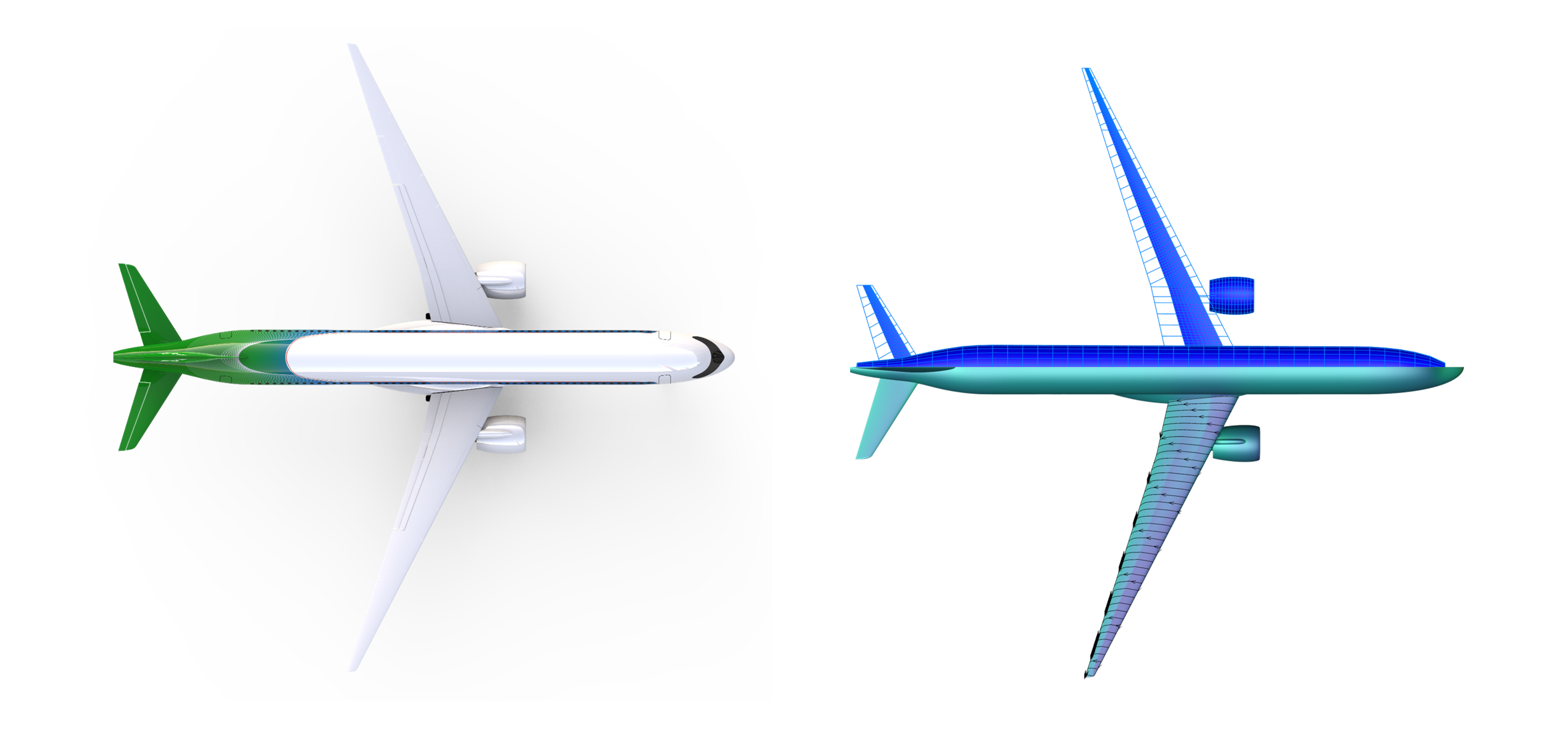
Research and industry both show a strong interest in MDO. Yet restrictions, differing perspectives and constraints make it difficult for the two communities to advance together. Both need MDO, but they start from different points and face different constraints. This need motivated the MDO Benchmarks for Aircraft Design Working Group. Two decades of research have made these methods genuinely powerful. To bring them into everyday aircraft design, the community needs a shared, realistic test case: one that carries the full set of constraints a real aircraft must satisfy. The MDO Benchmark provides exactly that. Participants work on the same aircraft — the DLR-F25, with its very high aspect ratio wing — and receive its geometry, its computational models, and the global and local constraints that aircraft designers work with every day.
Based on the next generation DLR-F25 aircraft configuration developed at DLR, this MDO benchmark, born from a partnership between research institutions and industry stakeholders, contributes to the “MDO Benchmarks for Aircraft Design working group” initiative. The MDO Benchmark working group initiative encompasses two benchmarks: the Simple Transonic Wing, which provides a foundational starting point for MDO, and the DLR-F25 acting as a grand-challenge problem. Having introduced the baseline design of the DLR-F25, DLR is collaborating with industry leaders (Bombardier, AIRBUS, and AIRBUS Defence and Space), as well as research organisations (ONERA and NASA), to establish a benchmark that reflects the needs and the challenges of the aircraft industry.
Objective
The primary objective of this initiative is to create a platform for the development, testing, and cross-validation of MDO capabilities that align with the aircraft design life cycle prevalent in the industry. This platform seeks to bridge the gap between academic research and industry practices by educating researchers about industry requirements while facilitating the transfer of MDO-related innovative concepts from research to the aircraft industry sector. In this way, the benchmark aims to provide industry and research with a common basis for evaluating, comparing, and advancing MDO methods and tools.
Motivation and Targets
- Align the MDO research activities with industry requirements
- Allow gradual and seamless transition between single-disciplinary optimisation and MDO
- Construct a platform for cross-validating MDO capabilities among participants
Get Involved
The benchmark offers stages of increasing complexity to encourage broader participation and ensure reliable progress. It begins with the validation of design sensitivities and trades and progresses towards MDO under design uncertainties. This gradual approach lets participants verify their methods before tackling more complex MDO challenges. Participants can contribute by requesting the benchmark package, applying and validating their tools and methods, and sharing their findings with the community. The community encourages participants to attend the monthly working group discussions and present their results at international conferences, especially in the “MDO Benchmarks for Aircraft Design” special session at the SciTech conference. The website and the community’s regular meetings share results, benchmark developments and working group progress.
Click below for the task definition. New participants start with the Sensitivity and Trade Studies.
References
Establishing a Joint Research-Industry MDO Benchmark Based on the DLR-F25 Aircraft Configuration
AIAA 2026-0763. AIAA SCITECH 2026 Forum. January 2026. doi.org/10.2514/6.2026-0763
Establishing the DLR-F25 as a Research Baseline Aircraft for the Short-Medium Range Market in 2035
34th Congress of the International Council of the Aeronautical Sciences, Florence, Italy, 2024.