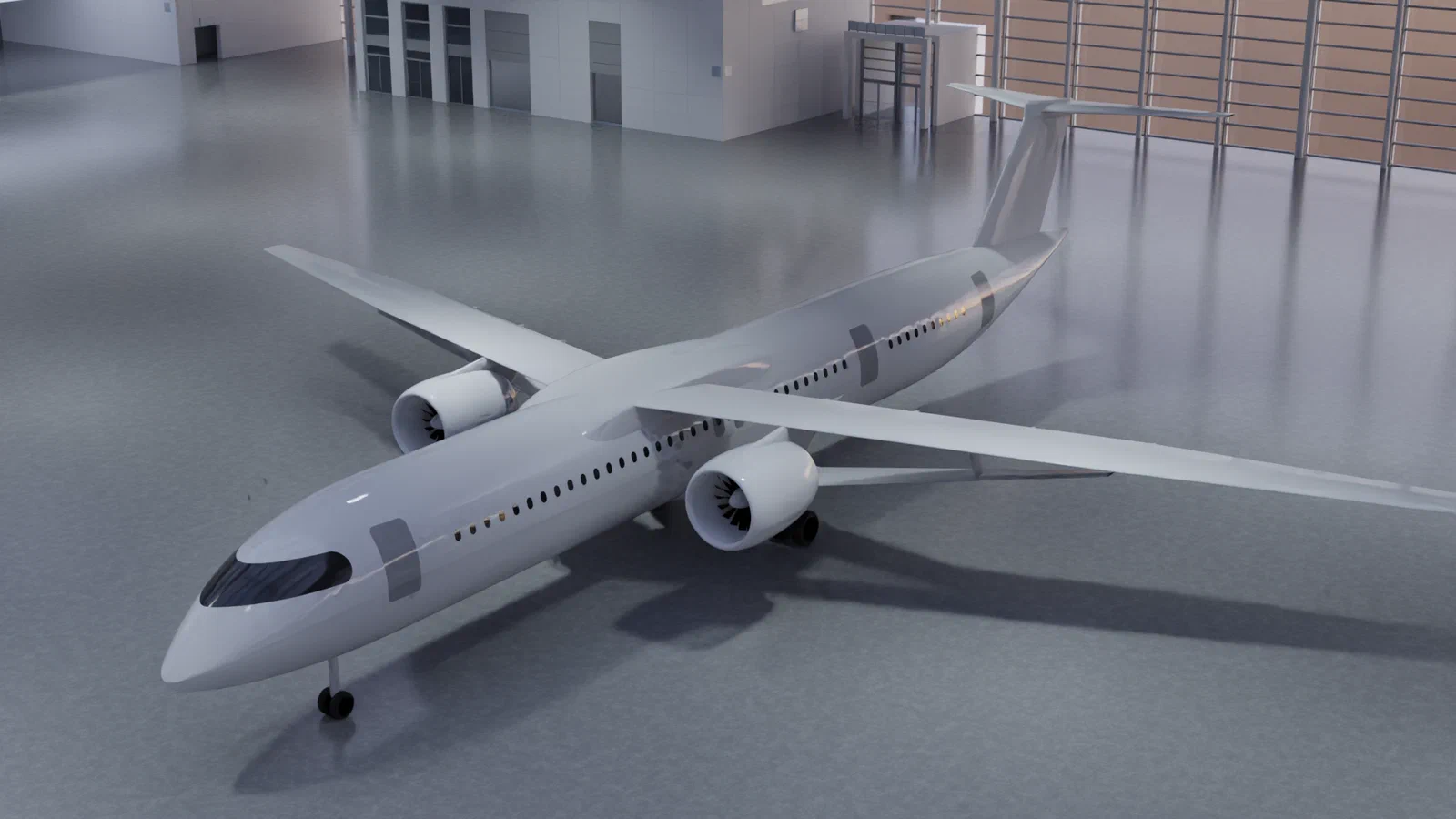
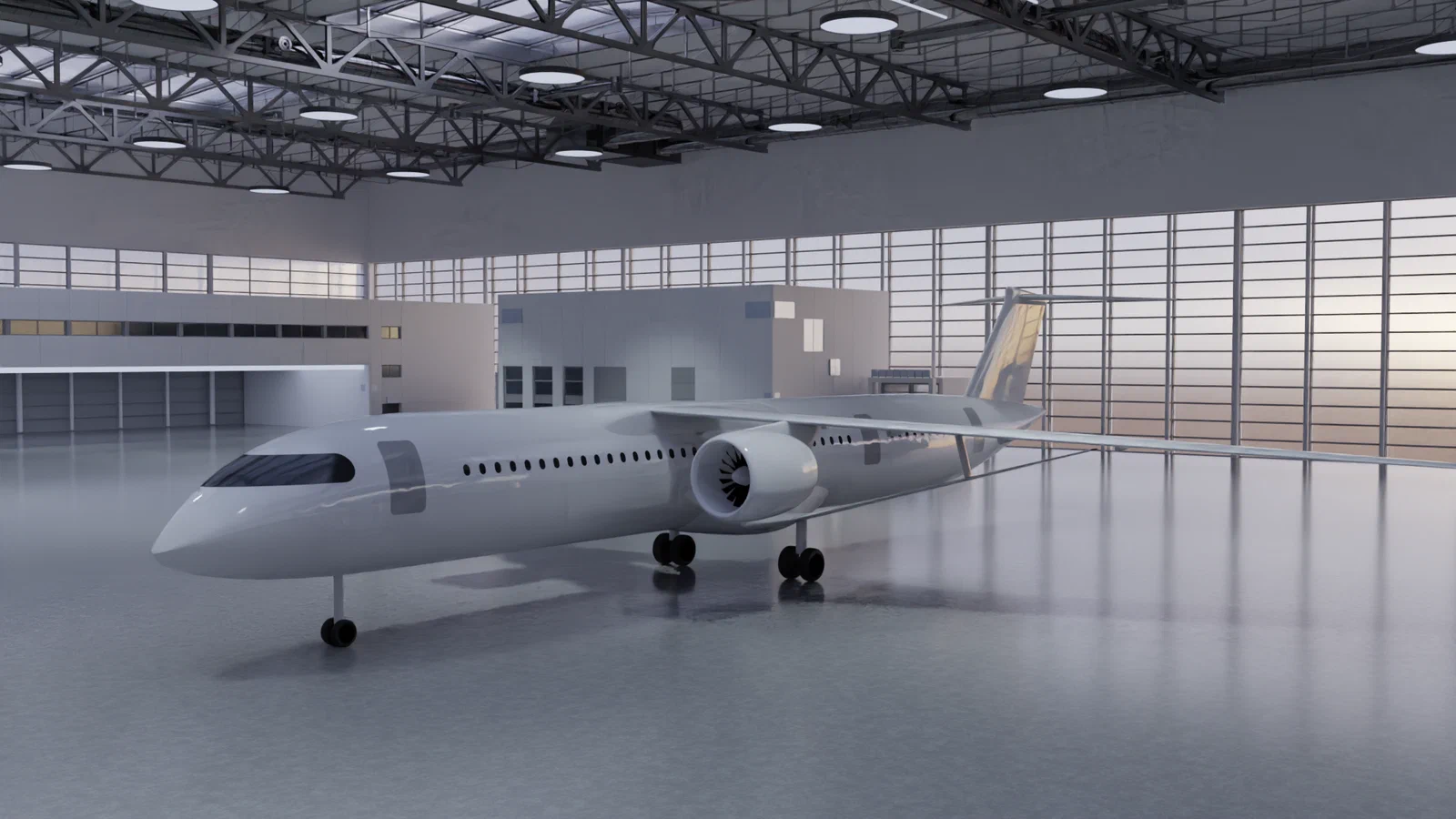
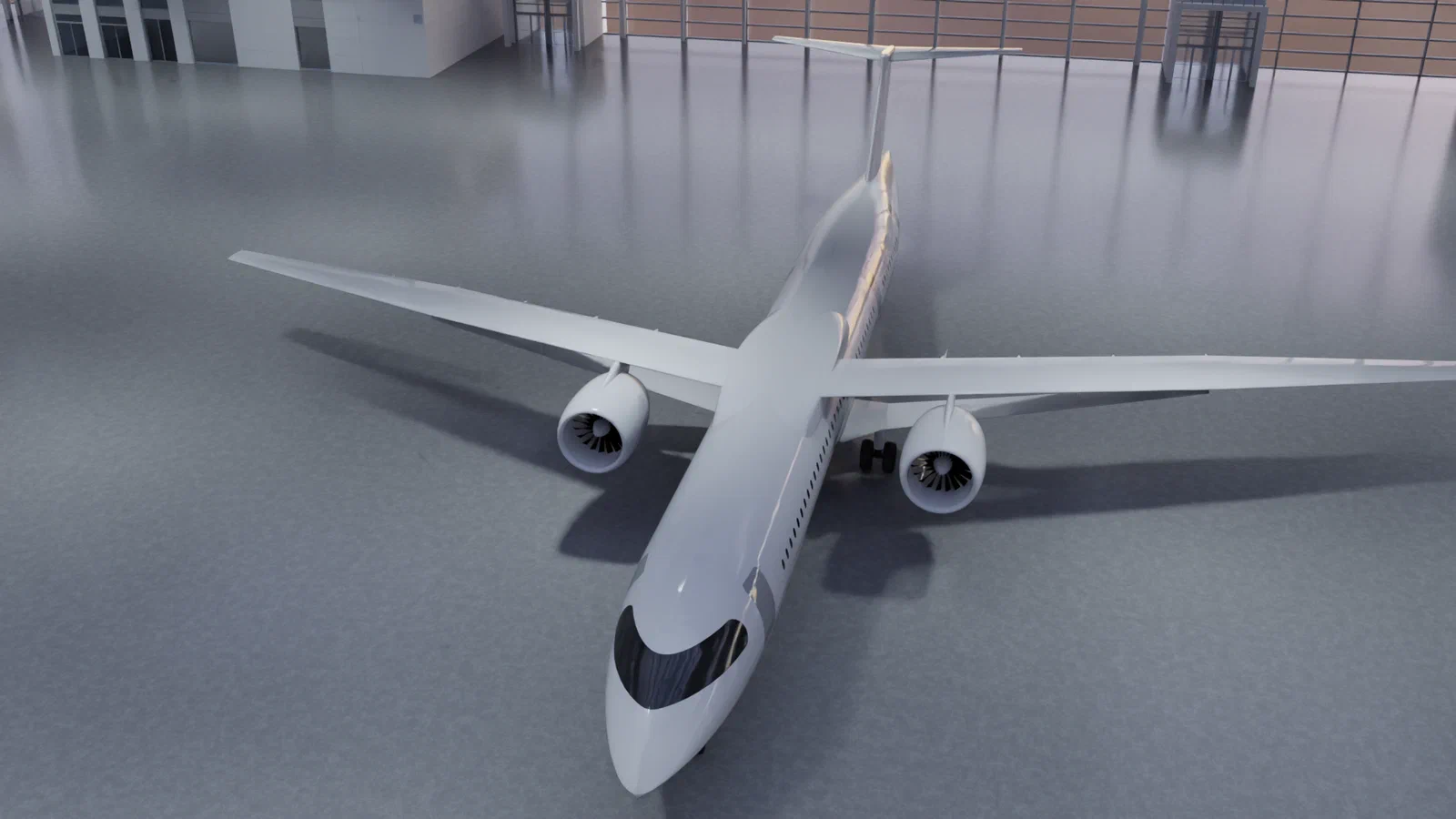
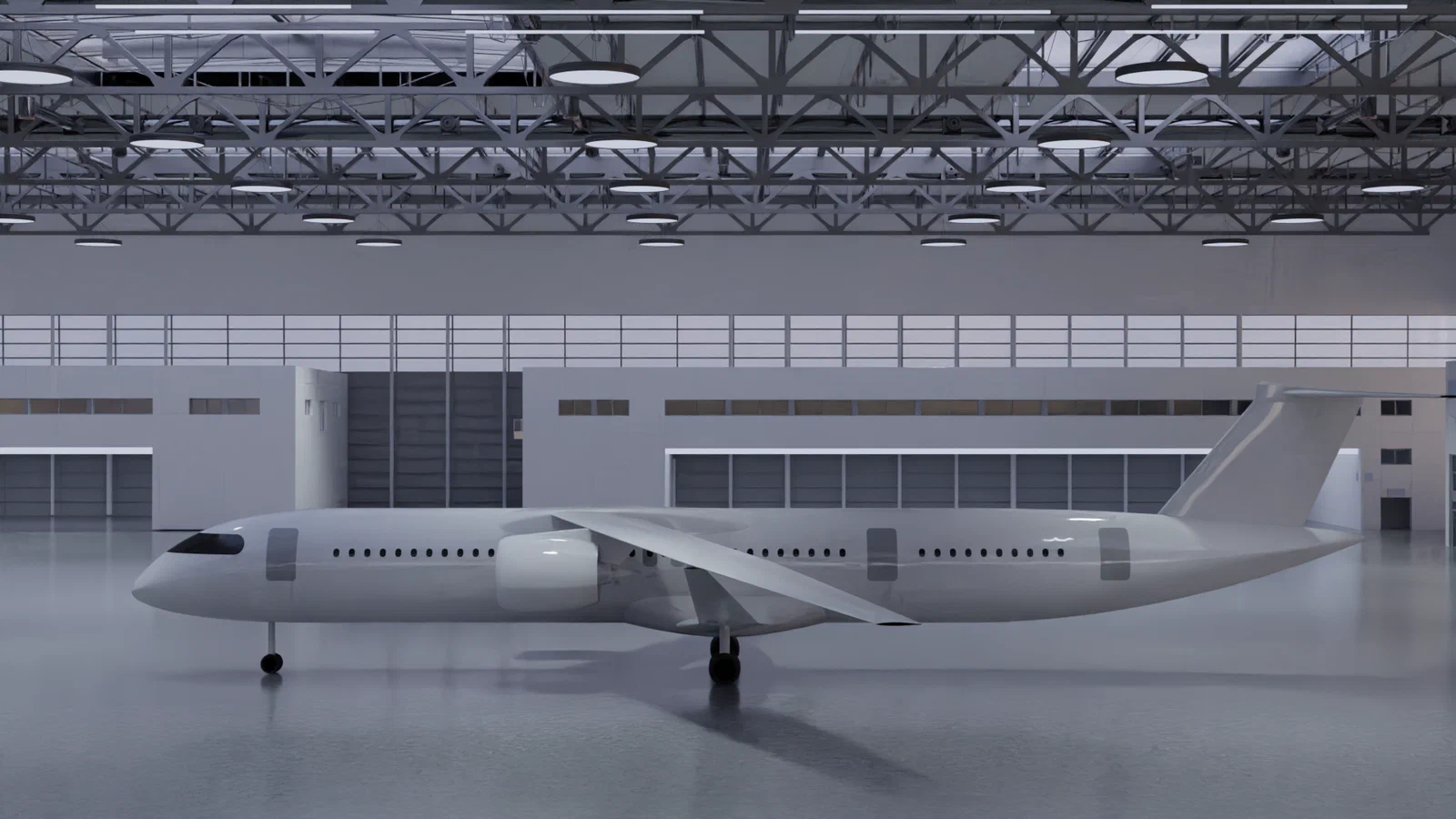
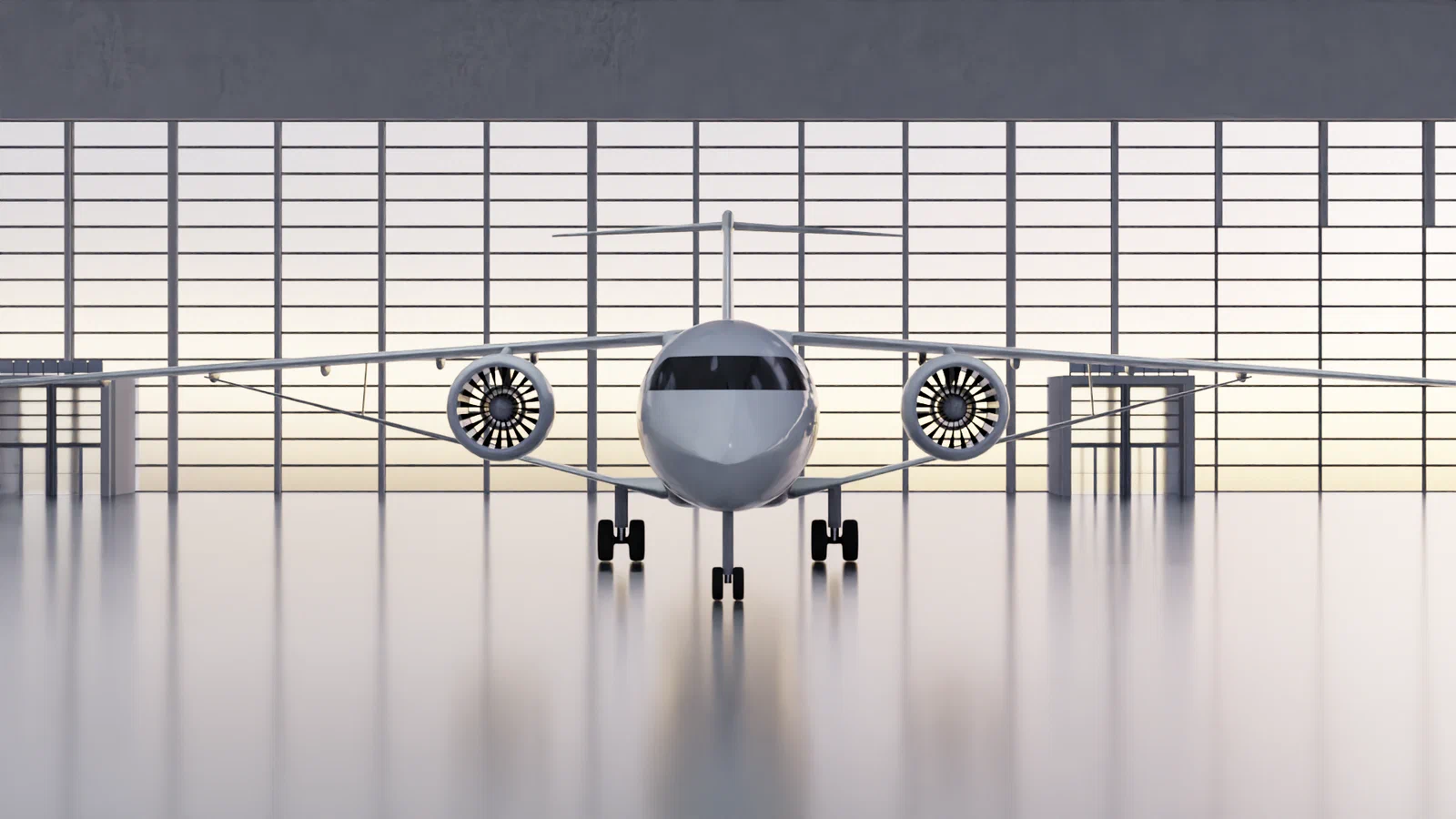
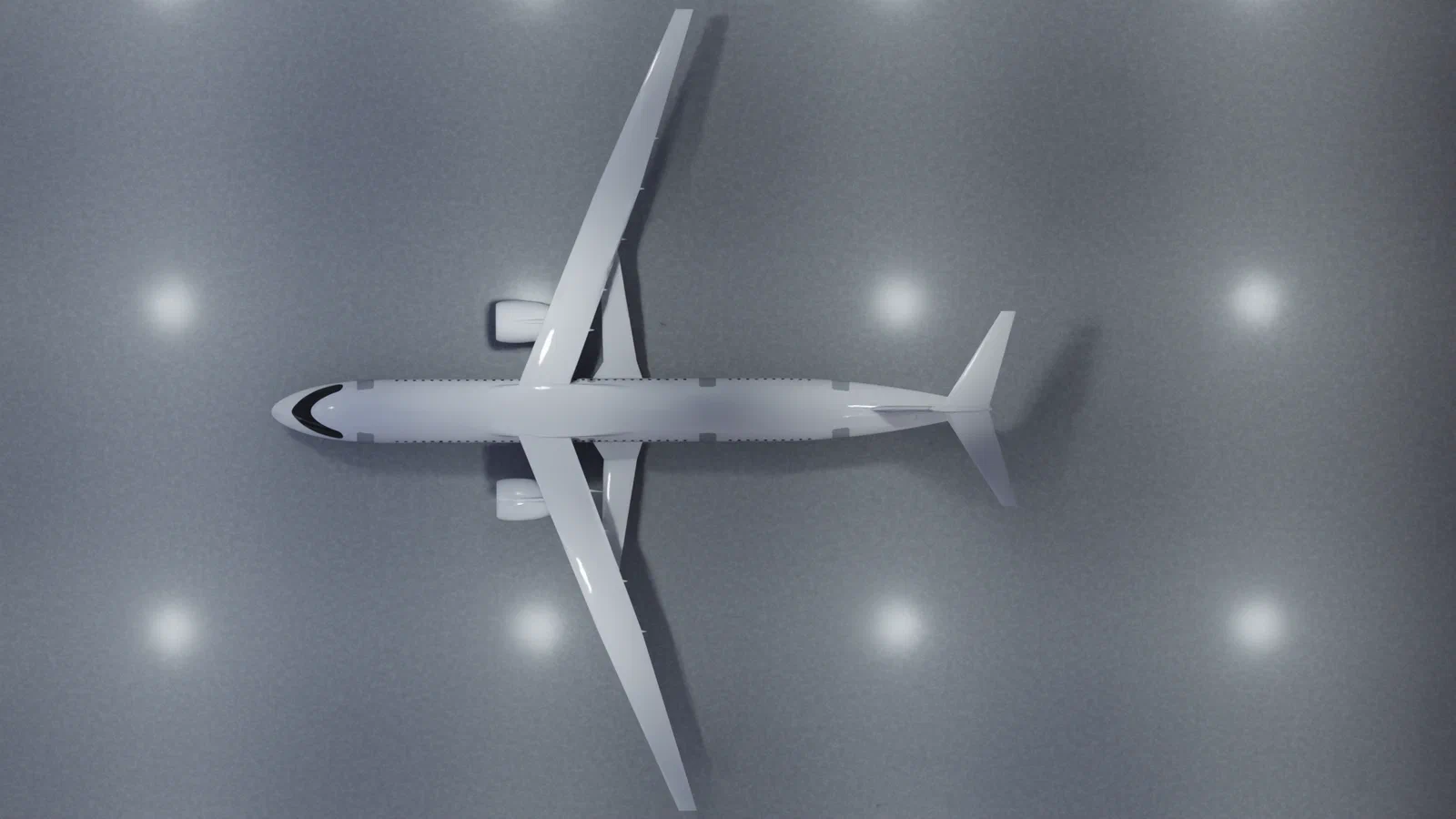
The T25 features a strut to enable a slender, high-aspect ratio wing, yielding an improved aerodynamic efficiency without a significant increase of the wing mass; the wingtips are foldable to maintain a good compatibility with existing airport infrastructures. Furthermore, as the high aspect-ratio wing has a low internal volume, part of the fuel is stored in an integral fuselage tank.
ZEexplore Truss-Braced-Wing Turbofan
Key Characteristics
- Research Category
- Future Concept
- Entry into Service
- 2035
- Passengers
- 239
- Range
- 4630 km
- Wing Span
- 49.5 m
- Maximum Take-Off Mass
- 84.692 t
- Cruise Mach Number
- 0.78
- Cruise Speed
- 828.5 km/h
- Energy Carrier
- Synth. Kerosene
- Energy Consumption
- 13.5 kWh/pax/100 km
- Total Installed Power
- 30.6 MW
The concept aircraft T25 features a special wing technology – the truss-braced wing. The slender high mounted- and supported wing is designed to improve efficiency and leads to a reduced fuel consumption as its increased wingspan and optimization for natural laminar flow (NLF) reduces aerodynamic drag.
The T25 also features an Ultra-High Bypass Ratio (UHBR) turbofan engine, which significantly improves fuel efficiency and reduces emissions compared to traditional turbofan engines.
In addition, this aircraft allows for energy flexibility - it can either be operated with synthetic or with fossil kerosene.
Advantages
- High aerodynamic efficiency
- Highly compatible with existing aircraft infrastructures
- Little to no reliance on an active gust load alleviation system
Challenges
- The additional strut component of the wing can lead to higher manufacturing costs
- Challenging aerodynamic design
Project & Partners
The T25 was designed in the Germany federal aviation research programme LuFo-VII project ZEexplore in partnership with Airbus.
Outlook
In the next steps of the ZEexplore project, different variants of this concept will be developed to investigate the possible synergies with other technologies. This will include a liquid hydrogen powered version, and one featuring an open-rotor engine.
Key Characteristics
Mission and requirements
- Design Range
- 2500 NM (km)
- Design Passenger Capacity
- 239
- Design Cruise Mach Number
- 0.78
Masses
- Max. Take-Off Mass (MTOM)
- 84.7 t
- Max. Landing Mass
- 74.2 t
- Maximum Zero-Fuel Mass
- 71.5 t
- Operating Empty Mass (OEM)
- 46.5 t
- Maximum Fuel Mass
- 15.9 t
- Max. Payload
- 25 t
Geometry and cabin
- Wing Area
- 122.7 m^2
- Wing Span
- 49.5 m
- Mean Aerodynamic Chord
- 2.1 m
- Wing Loading (at MTOM)
- 577.7 kg/m^2
Propulsion and energy
- Thrust-to-Weight Ratio (at ISA)
- 0.209
- Engine Type
- Turbofan
- Thrust (a Sea Level Static, ISA)
- 86.6 kN
Mass Breakdown
Fuselage Structure
14.6 % · 12.36 t
OIM
8.2 % · 6.93 t
Wing
8.0 % · 6.75 t
Engine
7.8 % · 6.57 t
System
5.9 % · 5.01 t
Furnishing
4.3 % · 3.60 t
Landing Gear
2.4 % · 2.04 t
Struts
1.8 % · 1.50 t
Pylon
0.9 % · 0.75 t
VTP
0.7 % · 0.56 t
HTP
0.5 % · 0.43 t
Fuel Block
12.6 % · 10.65 t
Fuel Reserve
3.0 % · 2.54 t
PAX
26.8 % · 22.71 t
Cargo
2.7 % · 2.30 t
Click a group to see its components.
Payload-Range Diagram
Payload-range limit
Study missions
Show data as table
| Point | Range (NM) | Range (km) | Payload (t) |
|---|---|---|---|
| Limit | 0 | 0 | 25.00 |
| Limit | 2,500 | 4,630 | 25.00 |
| Limit | 3,208 | 5,941 | 22.35 |
| Limit | 3,990 | 7,390 | 0.00 |
| Study mission | 800 | 1,481 | 25.00 |
| Study mission | 2,500 | 4,630 | 25.00 |